







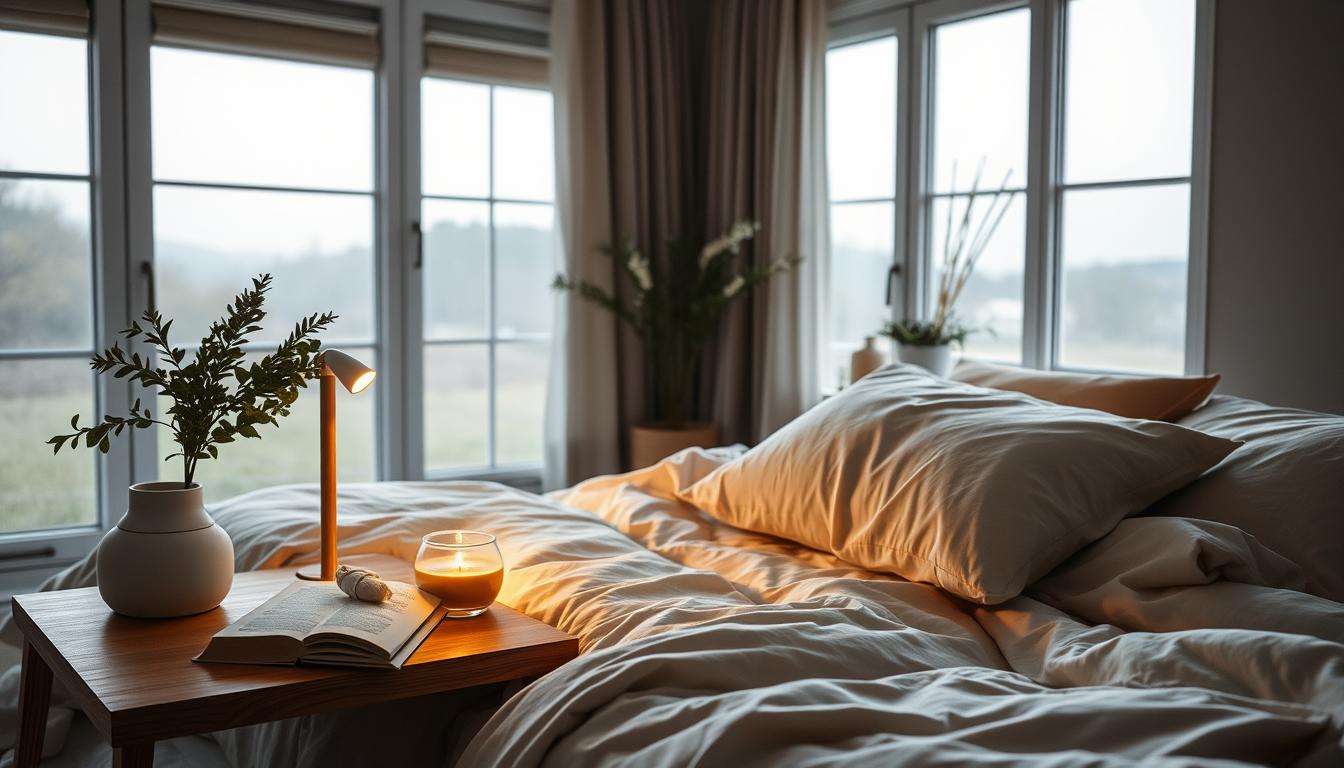
Getting a good night’s sleep is key for health and happiness. Yet, over 60 million Americans struggle with poor sleep. This can harm thinking, mood, heart health, and immune system.
It’s important to find ways to sleep better. This way, you can wake up feeling full of energy and ready for the day.
Improving sleep quality is vital for a healthy life. There are many ways to do this, like making your sleep space cozy or using relaxation techniques. In this article, we’ll share tips to help you sleep better.
With the right strategies, you can sleep better and avoid health problems like heart disease and obesity. By using better sleep hacks, you can start your journey to a healthier, happier life. This will help you sleep better every night.
Understanding Your Sleep-Wake Cycle
Regulating your sleep-wake cycle, also known as your circadian rhythm, is key to better sleep. This cycle is influenced by light and darkness, and other factors. Knowing how it works helps you improve your sleep and wake up feeling great.
Studies show that light and darkness control our sleep-wake cycle. Natural light during the day helps set our circadian rhythm. Darkness at night tells our body it’s time to sleep. This knowledge helps us make better choices about our daily routines and sleep.
For better sleep, avoid screens before bed and have a calming bedtime routine. Also, keep a regular sleep schedule and create a sleep-friendly environment. By controlling your sleep-wake cycle and making smart sleep choices, you’ll wake up feeling refreshed and ready for the day.
Remember, our circadian rhythm affects our health and wellbeing. Disruptions can cause fatigue, lower productivity, and raise the risk of chronic diseases. By focusing on our sleep and regulating our sleep patterns, we can live a healthier life and avoid sleep disorders.
Creating the Perfect Sleep Environment
A well-designed bedroom design can greatly impact sleep quality. To create the perfect sleep environment, consider temperature, lighting, and noise levels. The ideal bedroom temperature for sleep is between 60 to 71 degrees Fahrenheit. This range helps avoid heat that can disrupt sleep quality.
Investing in a comfortable mattress and pillows is key for a good night’s sleep. A medium-firm mattress is often recommended. Side sleepers might prefer softer foam mattresses for better pressure relief. Keeping the bedroom cool, dark, and quiet also improves sleep quality. Blackout curtains and a white noise machine can help with this.

A tidy and organized bedroom also promotes better sleep. Clutter can cause stress, which hinders quality sleep. Regular cleaning reduces dust mites and allergens, making the sleep environment healthier. By focusing on these elements, you can make your bedroom sleep-friendly, leading to better sleep and more energy in the morning.
Also, bedroom design affects sleep quality. Soothing colors like blue, yellow, green, and silver can calm the atmosphere. Neutral or pastel shades are also effective. By designing your bedroom with these considerations, you can enhance your sleep and wake up feeling refreshed.
Essential Better Sleep Hacks That Actually Work
Many people want to improve their sleep quality. There are several better sleep hacks to help. Using relaxation techniques before bed is a great way to start. Deep breathing, muscle relaxation, and meditation can help you relax and sleep better.
Studies show that using relaxation techniques can lead to better sleep quality. A regular sleep schedule and a calm sleep space also help. These better sleep hacks can make a big difference in your sleep.
Small changes can make a big difference over time. Just a few minutes of relaxation techniques each day can improve your sleep quality. Try different better sleep hacks to find what works for you. With time and effort, you can develop good sleep habits.
Putting sleep quality first can greatly improve your life. Better sleep means better physical and mental health. Start improving your sleep tonight and enjoy a healthier life.
Nutrition’s Role in Quality Sleep
Nutrition is key to getting good sleep. Eating foods that help sleep can make rest better. Foods like tryptophan and complex carbs boost serotonin and melatonin, which control sleep.
Eating whole foods, fruits, and veggies can also help sleep. Foods high in fiber, like apples and bananas, lead to deeper sleep. But, eating big meals or spicy foods before bed can mess with sleep.

It’s also important to watch when and how much you eat. Eating a big breakfast and avoiding heavy meals at night helps sleep. Cutting down on caffeine and alcohol before bed is also good for sleep. Making smart food choices can make you feel more awake and refreshed in the morning.
Adding sleep-friendly foods to your diet and watching your eating habits can improve sleep. With a bit of planning, you can wake up feeling great and ready for the day.
Physical Activity and Sleep Quality
Regular physical activity is key for health and well-being. It also impacts sleep quality. The Physical Activity Guidelines for Americans suggest 150 minutes of exercise weekly for better sleep quality. But, it’s important to know how exercise and sleep interact.
Exercising too close to bedtime can mess up sleep patterns. Yet, regular physical activity can boost sleep quality.
A 2020 review of 41 studies found that late bedtime or irregular sleep pattern harms sleep quality. Bright light in the day, though, can help sleep quality and length. Finding a balance between physical activity and sleep is vital for good sleep quality.
To get better sleep quality, add regular physical activity to your day. Avoid exercise before bed. Also, keep a consistent sleep pattern and make your sleep space sleep-friendly. Remember, physical activity and sleep are connected. The right balance is essential for restful nights and better health.
Mind-Calming Techniques for Better Rest
Using mindfulness and meditation for sleep can really help your sleep. Adding these to your bedtime routine can lower stress and anxiety. This makes it easier to fall and stay asleep.
Deep breathing, like inhaling for 4 seconds and exhaling slowly, can calm your heart rate. It helps slow down racing thoughts, leading to relaxation.
Practicing mindfulness and meditation for sleep trains your body to sleep better. Writing down tasks before bed can also help you sleep faster. Talking about worries can stop negative thoughts, helping you relax and sleep better.

Progressive muscle relaxation and visualization are also good. They help you relax by tensing and releasing muscles and pushing away thoughts. Adding these to your routine can make you sleep better and wake up feeling good.
Regular mindfulness and meditation for sleep can change your brain. This can make your sleep even better.
Mind-calming techniques like mindfulness and meditation for sleep are key for better sleep. They help reduce stress and anxiety. By making them part of your daily life, you’ll wake up feeling refreshed and ready for the day.
Technology and Sleep: Finding Balance
Using electronic devices before bed can mess up your sleep. The blue light from screens can make it harder to fall asleep and cut down on sleep time. Having devices in your bedroom makes it easy to get distracted at night, which can mess up your sleep.
Research shows that blue light glasses can help lessen the bad effects of blue light on sleep. Setting a “screens off” time every day can help you sleep better and avoid using devices late at night. Many devices have a night mode that cuts down on blue light, which might help you sleep better.
Studies have found that using electronic devices in your bedroom can actually improve your sleep quality and length.
Natural Supplements for Enhanced Sleep
Natural supplements like melatonin can help you sleep better. They work by improving your sleep quality and making you feel more alert in the morning. Studies show that melatonin helps older adults with insomnia sleep better.
But, taking melatonin can make you feel sleepy during the day. You might also experience headaches, dizziness, or nausea. Some people even have nightmares.
Valerian root is another supplement that’s often used for sleep. But, research shows it doesn’t really help you sleep better than a placebo. On the other hand, kava can cause serious liver damage, so it’s not safe to use.
Magnesium, though, is a different story. It has been linked to better sleep quality and longer sleep times. Light therapy also helps regulate your sleep-wake cycle and boosts melatonin levels.
Supplements with magnesium, melatonin, and L-theanine can improve your sleep. They don’t make you feel groggy in the morning. So, they’re a good choice for better sleep.

Establishing a Productive Bedtime Routine
A consistent bedtime routine is key to better sleep. It means having a regular sleep schedule and avoiding exciting activities before bed. By setting up a sleep routine that fits you, you can sleep better and wake up feeling great.
A daily bedtime routine includes activities done 30 to 60 minutes before bed. Starting a bedtime routine helps those who don’t sleep enough get the rest they need. It can include deep breathing, muscle relaxation, and writing down your thoughts before bed.
To make a productive bedtime routine, avoid big meals and alcohol before bed. They can cause indigestion and mess with your sleep. Instead, have light snacks like fruit or yogurt. A warm bath an hour before bed can also help you relax and sleep better.
Regular meditation, like what Headspace and Calm offer, can make your sleep better. Deep, slow breathing can calm your heart and mind. After just five cycles, you’ll feel more relaxed. Adding these to your bedtime routine can make you sleep better and wake up feeling refreshed.
Managing Sleep Disruptions
It’s key to beat sleep disruptions to keep sleep quality up. Issues like insomnia and sleep apnea can make you tired and stressed. To tackle these, stick to a regular sleep schedule and make your sleep space comfy.
Studies show that relaxation methods, like deep breathing and muscle relaxation, can calm you down. Also, stop doing exciting things before bed and have a calming bedtime routine.
Dealing with sleep disorders is tough, but the right steps can help. Stay away from blue light from screens, don’t drink alcohol, and keep your room cool. These habits can cut down on sleep problems and boost your health.
Knowing why you have sleep issues and how to fix them is a big step. It can lead to better health, including a strong heart and brain, stable mood, and more energy. Fighting sleep problems takes time and effort, but it’s worth it for your health.
Weekend vs. Weekday Sleep Patterns
Keeping a consistent sleep schedule is key for our body’s rhythm. Yet, many people sleep differently on weekends than weekdays. This change can harm our sleep quality and health. Adults need at least seven hours of sleep for good mental and physical health.
Studies show that weekend sleep can help counteract weekday sleep loss. A study by the Stress Research Institute at Stockholm University found a link. It showed that those sleeping five hours or less during the week had a higher death rate over 13 years. This suggests that enough weekend sleep can help balance out short weekday sleep.
To keep a consistent sleep schedule, set the same bedtime and wake-up time every day, including weekends. This helps our body’s internal clock and improves sleep quality. By focusing on sleep and sticking to a routine, we can boost our health and happiness.
Your Path to Lasting Sleep Improvement
To get better sleep, start with a good sleep space. Make your bedroom cool, dark, and quiet. Also, have a bedtime routine to tell your body it’s time to sleep.
Try relaxation techniques like deep breathing or stretching. These can help you sleep better. By focusing on sleep, you can wake up feeling great.
Small changes can make a big difference in your sleep. Make sleep a priority. You’ll feel refreshed and ready to go.