







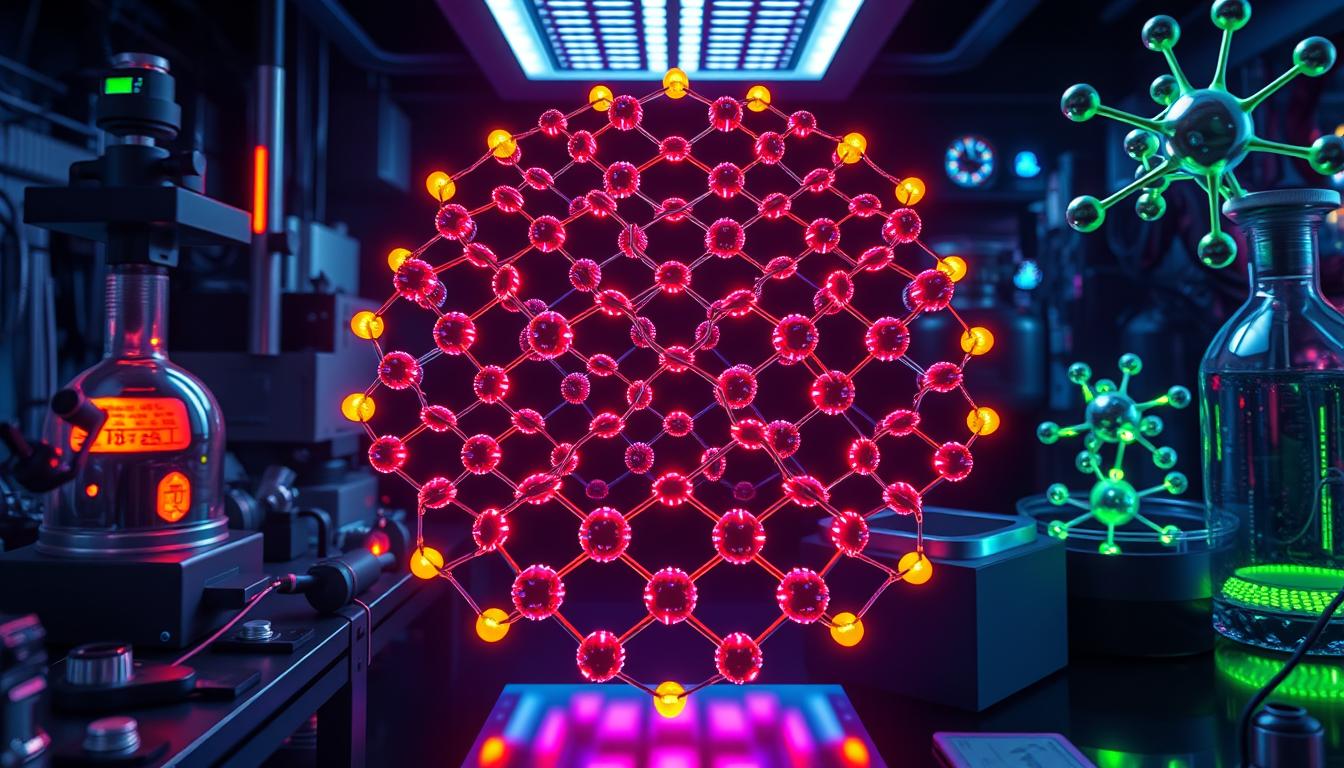
Materials science is a field full of wonder, leading to the discovery of amazing materials like graphene. Graphene is just one layer of carbon atoms. It’s incredibly strong, conducts electricity well, and is very flexible. It’s considered one of the coolest materials on Earth.
Graphene has the power to change many industries. It’s making our lives better by creating stronger, lighter materials for buildings. It also helps make electronics more efficient.
We’re going to look into the latest in graphene and other advanced materials. We’ll see how they affect our daily lives. From green materials to smart ones, the possibilities are endless. The future of materials science is bright.
Thanks to materials science, we can find new solutions and overcome challenges. This makes our world a better place.
Introduction to Materials Science
Materials science is a field that mixes physics, chemistry, and materials engineering. It helps us understand and make materials with special properties. This field has been key in our tech growth, from nanotechnology to new materials.
Materials engineers are essential in making, testing, and designing materials. Their work has greatly helped in innovation.
Studying materials science means looking at the structure, properties, and uses of different materials. It covers many areas, including nanotechnology. By studying materials at the nanoscale, scientists can make new materials with better strength and conductivity.
Materials science is used in many fields like energy, aerospace, and medicine. New materials with special properties could change these industries and our lives. As research in materials engineering and nanotechnology grows, we’ll see more innovative materials. This will lead to big tech breakthroughs.
The future of materials science is exciting and full of possibilities. As we continue to push the boundaries of what is possible with materials, we can expect to see significant advancements in various fields, from energy and medicine to aerospace and beyond.
The Rise of Graphene
Graphene is a cutting-edge material that’s getting a lot of attention. It’s known for its high electrical and thermal conductivity, as well as its strength. Graphene applications are wide-ranging, from electronics and energy storage to medical devices and composites.
Graphene research is moving fast, with many groups working on it. Its ability to change industries is huge. For example, it could make aircraft and vehicles lighter and stronger. It’s also being looked at for new medical tools and implants.

Graphene’s rise isn’t just about tech; it’s also creating new jobs and economic chances. As demand for graphene grows, new businesses and industries are popping up. This boosts research and development, starting a cycle of growth.
Graphene has the power to change many fields, from tech to healthcare. Its effects will be seen for generations.
As graphene research keeps advancing, we’ll see more amazing uses for it. With its special properties and endless possibilities, graphene is an exciting field. Its impact will be felt for many years.
Other Exciting Materials
Researchers are always finding new materials in the world of materials science. They focus on sustainable materials to help the environment. For example, nanocellulose is a biodegradable material used for green packaging and biocomposites.
They also work on advanced materials with special properties. Metamaterials, for instance, have properties not found in nature, like a negative refractive index. These could change how we handle energy, aerospace, and medicine. Superconducting materials are also being studied for better energy use and storage.
Experts say new materials are key to solving big problems like climate change and energy needs. Using sustainable materials and advanced materials can lead to a greener, more efficient future. As research grows, we’ll see more innovative materials that change our lives.
“The discovery of new materials is a key driver of innovation, and it has the power to change industries and our daily lives.”
Materials science is making fast progress, opening up new possibilities. From sustainable materials to advanced materials, the future looks bright.
Understanding Nanomaterials
Nanotechnology is a growing field with many uses. It deals with materials that are 1 to 100 nanometers in size. This area has led to new materials with special properties through materials engineering.
Materials act differently at the nanoscale than they do at larger sizes. For example, something that’s hard at a big size might be soft at a tiny size. This makes nanomaterials great for things like medicine, electronics, and energy. 
Scientists can make nanomaterials with certain traits, like being conductive or strong. These materials could change many industries, like healthcare and energy. For example, they could make solar cells work better or help in making new medicines.
Nanotechnology has the power to change our lives and work. Its effects will be seen in many areas, from energy and the environment to medicine and making things.
As nanotechnology research grows, we’ll see more uses for nanomaterials. Materials engineering will be key in making these new materials. With its huge possibilities, nanotechnology is an exciting field that promises a lot for the future.
Bio-Inspired Materials
Nature has always inspired human innovation, including materials science. Scientists study nature’s properties and structures. They design bio-inspired materials like self-healing ones and strong, yet light composites. These materials could lead to sustainable materials and new discoveries.
For example, sharkskin-inspired surfaces cut down on drag and stop bacteria. Abalone shell-inspired composites are both strong and light. These materials are not just new but also sustainable, helping the environment. As we look to nature for more ideas, we’ll see more breakthroughs in bio-inspired materials.
The possibilities for bio-inspired materials in sustainable materials are huge. By copying nature’s efficient use of resources, scientists can make materials that are both top-notch and eco-friendly. As we need more sustainable materials, the study of bio-inspired materials is key to our future.
Nature is a powerful inspiration for innovation, and the field of materials science is no exception. By studying the natural world, scientists can design materials that are not only innovative but also sustainable.
Sustainable Materials
The world is moving towards being more eco-friendly. This shift highlights the critical role of sustainable materials. In materials science, scientists are working hard. They aim to find materials that cut down waste, encourage recycling, and lessen harm to the environment. Graphene is a standout material, with its many uses in energy, water, and building.
Using sustainable materials is key to a greener tomorrow. We can lessen the environmental harm of many sectors by using renewable resources, cutting down on waste, and making products recyclable. For example, graphene is making solar panels more efficient, improving water cleaning systems, and helping create eco-friendly building materials.

Experts say the path to a sustainable future is through sustainable materials and practices. By adopting these, we can lessen our environmental harm and boost innovation and economic growth. As research finds more graphene applications and sustainable materials, we’ll see big strides in fields like energy, construction, healthcare, and tech.
The future of materials science is inextricably linked with sustainability. By prioritizing the development and use of sustainable materials, we can create a better world for generations to come.
Smart Materials
Imagine materials that can change their properties based on their surroundings. This is the world of smart materials, also known as advanced materials. They are designed to react to things like temperature, light, or pressure. They can be used in many different ways.
Shape-memory alloys are a great example. They change shape when the temperature changes. These materials are used in aerospace and medical devices. Piezoelectric materials are another example. They make an electric charge when pressed. These are found in smartwatches and fitness trackers.
Self-healing materials can fix themselves after getting damaged. They could change industries like aerospace and automotive. They could make self-healing coatings and composites. As research grows, we’ll see more uses of smart materials.
Experts say smart materials could change many industries. As they improve, we’ll see new uses. Their ability to change with their environment makes them key to future tech.
The Role of 3D Printing
3D printing is changing materials engineering by making complex structures and new materials. It’s making manufacturing faster and more flexible. With 3D printing, engineers can make shapes and structures that old methods can’t.
Materials engineering is key in 3D printing. It’s about making new materials with special properties. Scientists are working with metals, polymers, and ceramics to make unique products. This mix of 3D printing and materials engineering leads to green products like biodegradable plastics.

3D printing is big in materials science, making complex materials and structures. It’s used in aerospace, cars, and healthcare for new products. As 3D printing grows, we’ll see more green and innovative products in our lives.
The future of 3D printing is exciting, with possible uses in energy, environment, and healthcare. As research goes on, we’ll see big steps in materials engineering and new products.
Future Trends in Materials Science
Looking ahead, innovative materials will be key in shaping our future. Advances in nanotechnology, artificial intelligence, and biotechnology open up huge possibilities. Scientists are working on making materials that are sustainable and use less energy, tackling big issues like climate change.
The impact of future trends in materials science will be huge across many fields. For example, new materials like graphene are making solar cells, batteries, and fuel cells more efficient. They’re also helping create greener buildings and reducing waste.
Experts say the future of materials science will blend engineering, biology, and computer science. This mix will lead to materials with amazing properties, like self-healing and shape-shifting. As research advances, we’ll see big leaps forward, thanks to future trends and innovative materials.
The future of materials science is about more than just new materials. It’s about making our world more sustainable, fair, and connected. By using innovative materials and trends, we can tackle big challenges and build a better future for everyone.
Conclusion: The Future of Materials
The world of materials science is full of exciting possibilities. Graphene and bio-inspired materials are leading the way. These advancements will change our world in big ways.
The materials science community is always looking for new discoveries. They also focus on making things better for our planet. This work is key to solving big problems and making our lives better.
Looking to the future, we’ll see materials that are smarter and more eco-friendly. They’ll be made to fit our exact needs. With technologies like 3D printing, we can make things faster and more customized.
This mix of new materials and tech will change many industries. Healthcare and building projects will see huge improvements. It’s like a dream come true.
The future of materials science looks very bright. It’s up to us to keep exploring and pushing limits. By working together and supporting research, we can make a future where new ideas and caring for the planet go together.
We have the power to shape the future of materials. The possibilities are endless. Let’s make the most of them.