







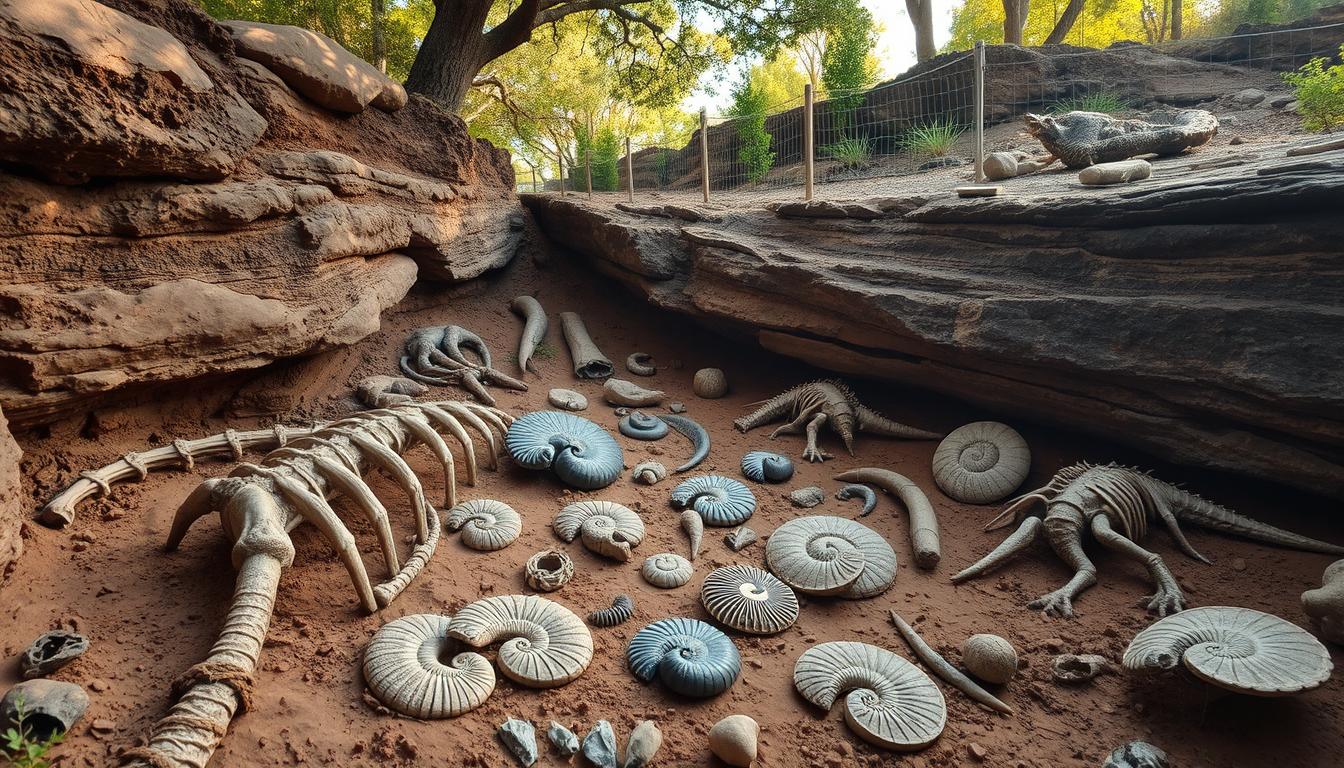
Fossils are like windows into the past, showing us the story of life on Earth long ago. The study of fossils is key in paleontology. It helps us understand how ancient species evolved, lived, and went extinct. By looking at fossils, we can learn about our planet’s history.
The field of paleontology is vital for knowing how our planet has changed over millions of years. Fossils give us hints about life back then. Paleontologists use this info to tell us about our planet’s past.
By studying fossils and paleontology, we learn about the connections between ancient life and its surroundings. This knowledge helps us understand the natural world better. It shows us why fossils are so important for knowing about life long ago.
Understanding Paleontology: What It Is and Why It Matters
Paleontological research is key to understanding Earth’s history. It looks at fossils and ancient life to learn about evolution. This helps us see how species adapt and how extinction events shape life.
This field combines geology, biology, ecology, and earth sciences. By studying fossils, scientists can build pictures of ancient worlds. They learn how species and environments interacted, which is important for understanding climate change’s effects.
Research in paleontology has uncovered many important facts. It shows us how extinction events have influenced life’s diversity. By studying fossils, scientists can see how Earth’s climate has changed. This knowledge helps us understand our impact on the environment and how to fight climate change.
The study of fossils is a window into the past, allowing us to understand the history of life on Earth and how it has evolved over time. By examining fossils and ancient life forms, scientists can gain insights into the complex interactions between species and their environments, and how these interactions have shaped the diversity of life on our planet.
In conclusion, paleontological research is essential for understanding Earth’s history. It helps us see how evolution, extinction events, and climate change have affected life. This knowledge is vital for protecting our planet and finding ways to reduce human impact.
Types of Fossils: A Closer Look
Fossilization is a complex process that preserves evidence of ancient life. It creates different types of fossils, each telling a unique story. These include trace fossils, mold fossils, cast fossils, and compression fossils. They help us understand the past and how life evolved on Earth.
The fossilization process is key in keeping the details of ancient life intact. Trace fossils show us how ancient creatures moved and lived. Mold fossils and cast fossils are like detailed copies of the original organism, made from minerals.

By studying these fossils, scientists learn about life’s evolution and diversity. The fossil record is a treasure trove of information. It continues to reveal the fascinating history of our planet.
The study of fossils is a window into the past, allowing us to learn from the experiences of ancient organisms and better understand the complex relationships between life and the environment.
As researchers dive deeper into fossil analysis, they improve their grasp of fossilization. This knowledge helps us understand Earth’s history and evolution better. It shows how our planet has changed over time.
The Fossilization Process: How It Happens
The fossilization process is a complex and fascinating phenomenon. It requires specific conditions for fossilization to occur. This includes the rapid burial of organic remains and protection from scavengers and oxygen.
Minerals must also be present to replace the original organic material. This process is key for the preservation of fossils. It helps us learn about the history of life on Earth.
Understanding the fossilization process is vital for paleontologists. It helps them find fossil-bearing sites and value fossil discoveries. The conditions for fossilization are very specific.
Only a small percentage of organisms that have lived on Earth have been preserved as fossils. The preservation of fossils is a delicate process. It requires the right combination of geological and environmental factors.
The study of fossils and the fossilization process has led to many important discoveries. By analyzing fossils, scientists can learn about the evolution of different species. They can also understand the formation of ecosystems and the impact of environmental changes.
The preservation of fossils is essential for continuing to learn about our planet’s history. It helps us understand the diversity of life that has existed on Earth.
The fossil record is a unique window into the past, allowing us to learn about the evolution of life on Earth and the processes that have shaped our planet.
By studying the fossilization process and the conditions for fossilization, scientists can refine their understanding of Earth’s history. The preservation of fossils is vital for this process. It allows us to learn from the past and understand the present and future of life on Earth.
Major Fossil Discoveries Throughout History
The history of paleontology is filled with key fossil finds. These discoveries have changed how we see prehistoric life. From dinosaur bones to ancient human fossils, each find has helped us learn more about Earth’s past.
Significant fossil discoveries have amazed people and inspired new scientists. The discovery of feathered dinosaurs, for example, changed how we see these ancient creatures. These finds also show the importance of keeping exploring and researching.

The impact on science of these finds is huge. By studying fossils, scientists learn about life’s evolution, the movement of continents, and climate changes. As we learn more about the past, we grow to appreciate the natural world’s complexity and beauty. More research could lead to even more important discoveries, shedding light on our planet’s history.
The study of fossils is a window into the past, allowing us to learn from the experiences of ancient creatures and better understand the world we live in today.
The Techniques of Paleontological Research
Paleontological research uses many paleontological techniques and tools. These include old methods like digging and preparing fossils. Also, new tech like CT scans and 3D printing is used. These methods help paleontologists learn a lot from fossils, build pictures of old worlds, and solve big questions about life’s history.
The tools in paleontology have made the field better. For example, CT scans let researchers look inside fossils without touching them. 3D printing makes detailed copies of fossils for more study.
Paleontologists keep improving their research methods. This lets them find new things about Earth’s history. With these paleontological techniques and tools in paleontology, scientists can make pictures of old places, follow how species change, and understand how life and its environment interacted.
Paleontological research is a dynamic and interdisciplinary field, drawing on expertise from geology, biology, and other disciplines to advance our understanding of the ancient world.
By using paleontological techniques and tools in paleontology wisely, researchers can keep learning more. They help us understand the past, present, and future.
Fossils and Extinction Events
The study of fossils has greatly helped us understand extinction events that have shaped life on Earth. By looking at the fossil record, scientists can spot patterns of extinction. They also learn about the possible causes of these events. The fossil record shows us major mass extinctions like the Permian-Triassic and Cretaceous-Paleogene extinctions.
These extinction events have deeply affected the diversity of life on Earth. By studying the fossil record of extinctions, scientists understand life’s resilience. They also learn about the survival or demise of species. The fossil record also tells us about life’s evolution and how species adapt to changing environments.

Studying mass extinctions and the fossil record has given us a better understanding of species and their environments. This knowledge helps in conservation efforts to prevent future extinction events. By continuing to study the fossil record and extinction events, scientists can deepen our understanding of Earth’s history and species diversity.
The fossil record is a powerful tool for understanding the history of life on Earth, and it continues to provide valuable insights into the complex and often mysterious processes that have shaped the evolution of our planet.
The Evolution of Life: Insights from Fossils
Fossils have greatly helped us understand life’s evolution on Earth. Transitional fossils, showing traits of both old and new groups, are key. They offer vital evidence for evolution, showing gradual changes over millions of years.
Transitional fossils reveal life’s dynamic and adaptable nature. They help scientists grasp the evolution process and species diversity. By studying fossils, researchers learn about life’s history and species evolution.
The fossil record is rich in information about life’s evolution. It shows the rise of new species and the fall of others. By looking at transitional fossils and other evidence, scientists can build evolutionary histories. This knowledge is vital for understanding our world and the evidence for evolution.
The fossil record is a testament to the incredible diversity of life on Earth and the complex processes that have shaped its evolution. By continuing to study fossils and the fossil record, scientists can gain a deeper understanding of the history of life on our planet and the mechanisms that have driven its evolution.
Fossils and Climate Change: What They Tell Us
Scientists study fossils and climate records to learn about Earth’s past climates. They find out how climate change affected ancient ecosystems. This helps them understand how life on Earth has changed over time.
Fossilized plants and animals give us clues about the past. This information helps scientists build models of ancient climates. These models show how species and ecosystems might react to climate change today and in the future.

By looking at fossils and climate change, researchers learn a lot about Earth’s climate history. This knowledge is key for finding ways to fight climate change. It helps us plan for a more sustainable future.
The study of fossils and climate change is a rapidly evolving field, with new discoveries and advancements in technology continually improving our understanding of the Earth’s climate history.
The Intersection of Paleontology and Technology
The field of paleontology has seen big changes with technology in paleontology. This mix has helped scientists learn more about life’s history on Earth. New tools in paleontological research have improved how we understand fossils and their past environments.
Digital fossil reconstruction is a key example of technology in paleontology. It lets researchers make detailed, 3D models of fossils. These models help study their shape and structure. Also, drones help find fossils in hard-to-reach places, making research more accessible.
As advances in paleontological research keep coming, scientists can ask and answer new questions. The mix of technology in paleontology has not just made fossils more interesting. It has also opened up new areas for scientists to explore and discover.
The intersection of paleontology and technology has opened up new avenues for discovery and analysis, enabling scientists to uncover the secrets of the past and shed light on the evolution of life on Earth.
By using advances in paleontological research and technology in paleontology, scientists can keep expanding our knowledge. This helps us better understand the natural world and our role in it.
Education and Advocacy in Paleontology
Paleontology education is key to getting people excited about fossils and the stories they share. It inspires the next generation of scientists and helps everyone appreciate nature more. Paleontology education can be through museums, online resources, and community events.
Advocacy is also vital for making paleontology more known and loved. It helps the public understand the importance of fossils and how to protect our planet. Public awareness campaigns highlight the need to save fossils and care for our environment.
Working together is a great way to boost advocacy in paleontology. Paleontologists, educators, and community leaders can create programs that engage people. This way, everyone can learn to love and protect our natural world.
To succeed in paleontology education and advocacy, we need to make it fun and accessible for everyone. By sharing fossil wonders, we can inspire and educate. This is essential for public awareness and advocacy efforts.
“Paleontology has the power to inspire and educate people about the natural world, and it is our responsibility as paleontologists to share this knowledge with the public and promote advocacy efforts.”
Future Directions in Paleontological Research
Paleontology, the study of ancient life, is growing in exciting ways. New trends like using artificial intelligence in fossil analysis and exploring fossils in space are changing the field. These advancements promise to bring new discoveries and innovations to paleontology.
AI and machine learning are set to make a big impact in paleontology. They can help scientists analyze huge amounts of fossil data. This could lead to major breakthroughs. Also, 3D scanning and printing are changing how fossils are studied and preserved.
Looking for fossils on other planets is becoming a big interest. As we explore space, finding life on other planets is a thrilling idea for paleontologists. It could help us understand life on Earth and if it exists elsewhere in the universe.
But, paleontology also faces challenges. It needs more funding, must protect fossil sites, and deal with ethical issues. Yet, by facing these challenges, paleontologists can keep expanding our knowledge of Earth’s history. They help us build a better future for our planet.