






Bioluminescence is a cool phenomenon where living things make their own light. It has amazed humans for centuries. Many animals, like the anglerfish, can light up their surroundings. This light-making ability helps them catch food and talk to others.
Some creatures, like glow worms and certain birds, glow to attract mates or hide from predators. The science behind this light is complex. Yet, it opens up new ways to understand nature and create new tech. Let’s explore how these glowing beings light up our world.
What Makes Living Things Glow: The Science of Bioluminescence
Bioluminescent creatures can make their own light through complex chemical reactions. These reactions mix luciferin and luciferase, creating light. This shows the amazing variety of life on Earth.
In the ocean, about 1,500 fish species can glow. This skill has evolved at least 27 times. It’s key for them to communicate, hide, and catch food.
The light-making process in these creatures is very efficient. It produces “cold light” with little heat. This is unlike incandescent bulbs, which get very hot.
Their light is also very focused. This helps them control how much light they show. In the deep sea, this skill is vital for survival.
Bioluminescence isn’t just for sea creatures. Fireflies and some fungi can also glow. This ability has even helped create new technologies, like green fluorescent protein in science.
Evolution’s Night Light: Why Organisms Developed the Ability to Glow
Many creatures, like deep-sea fish and glowworms, can glow. This is thanks to evolution and the adaptive advantages of bioluminescence. It helps them communicate, attract food, or avoid predators.
Studies show bioluminescence started about 540 million years ago. It has appeared independently over 100 times in different species. This shows how important bioluminescence is for many organisms’ survival.

Being able to glow is key for many creatures. Anglerfish use it to catch prey, while loosejaws search for food by glowing red. Even marine animals like brittle stars use it to distract predators.
Bioluminescence is a vital part of our ecosystem. As we learn more about it, we might find new uses in medicine and technology.
Deep Sea Bioluminescence: Light in the Darkness
The deep sea is filled with bioluminescent fish and other creatures. They have adapted to the dark, harsh environment. These creatures use light for communication and camouflage.
Many deep-sea creatures produce blue light. This color travels far through water, making it perfect for signaling.
Some deep-sea creatures can also see and produce red light. This helps them stay hidden from other sea animals. For example, the blackdragon fish changes its light from bright flashes to dimming. This shows when it’s running out of light-making chemicals.
In the deep sea, deep-sea bioluminescence has many uses. It attracts prey, mates, scares predators, and helps with camouflage. Because there are no hiding spots, bioluminescence is more common here than on land.
This has led to a variety of bioluminescent organisms in the deep sea. Each has its own special traits and abilities.
Fireflies and Their Mesmerizing Light Shows
Fireflies are famous for their dazzling light shows. They use bioluminescent communication to talk to each other, mainly when they’re looking for a mate. In North Carolina, you can find 30 to 40 different kinds of fireflies. Each species flashes its light at a unique time, like between 8:00 and 8:30 p.m., or 8:30 to 9:00 p.m.
Fireflies’ lights warn predators that they taste bad. Not all fireflies glow; some use smells to find their mates. The Photinus carolinus, or synchronous firefly, is found in North Carolina. Their light shows are a big deal, with the Great Smoky Mountains National Park hosting a special event for eight days and nights.

The firefly viewing event is loved by families. It’s a chance for adults to share their childhood memories with their kids. The synchronous firefly needs a lot of light to see and answer the male’s flashes. This ensures they communicate correctly. Fireflies’ unique ways of communicating and mating make them a favorite in our world.
Marine Bioluminescence: Glowing Waves and Floating Stars
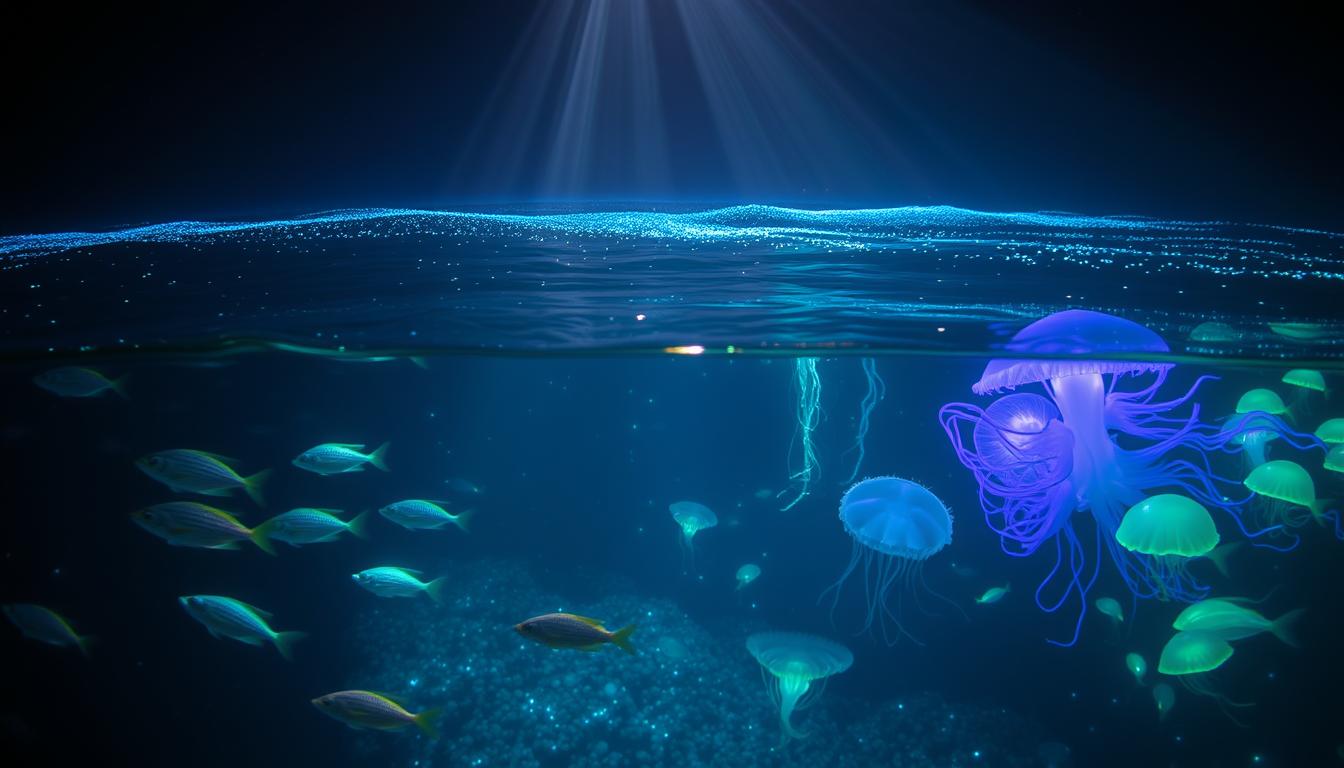
The ocean is full of marine bioluminescence. Many bioluminescent plankton and marine organisms light up the dark. About 1,500 fish species glow in the dark, and bioluminescence has evolved many times.
Most deep-sea animals glow, and many surface plankton like dinoflagellates do too. The ocean’s glow is mostly blue-green light. This light can travel through both shallow and deep water.
Some creatures, like the squid Octopoteuthis deletron, can lose their glowing arms to confuse predators. Dinoflagellates light up bright blue to defend themselves. The peak of plankton glow is in early January, sometimes lasting a month more.
Glowing waves in the Maldives happen at certain times, locals say. Places like Mosquito Bay in Puerto Rico and Jamaica’s Luminous Lagoon are famous for glowing beaches. Over 20 spots worldwide are known for their glowing life. The glow comes from a chemical reaction involving luciferin and luciferase.
These marine organisms use bioluminescent signals for many reasons. They attract prey, talk to each other, and defend against predators. Studying marine bioluminescence is exciting and helps us learn about the ocean’s glowing creatures.
Fungal Light: Mysterious Glowing Mushrooms
Bioluminescent fungi, like Mycena crocata, can glow, but only very faintly. Under the right conditions, M. crocata’s mycelium glows for up to 164 days. The fruiting body glows only at the base of the stipe.
The purpose of glowing in fungi is not fully understood. Some think it might attract insects to spread spores. Bioluminescent fungi have fascinated people for over 2,000 years. More than 70 species glow, including Panellus stipticus, one of the brightest.

The glow in fungi comes from a chemical reaction. Researchers found the key molecule, fungal oxyluciferin. They studied Neonothopanus gardneri and N. nambi, two glowing mushrooms. These glowing mushrooms are special in the ecosystem, affecting it in big ways.
In the ecosystem, glowing fungi interact with insects in interesting ways. They might attract insects to spread their spores. This interaction is important to study for understanding the ecosystem.
Practical Applications of Natural Light Production
Bioluminescent technology has many uses, like in medicine, agriculture, and tracking the environment. Natural light production helps in finding diseases like tuberculosis and checking stress in men who can’t have kids. It lets researchers watch how cells and molecules work in real time.
In medicine, bioluminescent markers help see and track tumors in animals. This helps doctors treat cancer better. Also, it makes finding new drugs faster and more accurate.
Bioluminescent tech is also good for farming and watching the environment. For example, it can show how infections spread and if treatments work. It can also find out if water is safe, helping us keep our planet clean. As we learn more, we’ll see even more cool uses for bioluminescent tech.
The uses of bioluminescent tech are endless and exciting. More research will bring even more breakthroughs. By using bioluminescent technology and natural light production, we can solve big problems. It’s a key area to study for the future.
Conservation and Protection of Bioluminescent Species
Bioluminescent species are vital to our planet’s diversity. Yet, they are threatened by habitat loss, pollution, and climate change. Efforts to save these species and their homes are underway.
The Vaquita, a North American bat, is at risk due to climate change. It changes their habitat and behavior. This makes saving them even more urgent.

Many bioluminescent creatures face danger from habitat loss, pollution, and climate change. We will look at how we can protect them. The aim is to use the right keywords without making the text hard to read.
Observing Bioluminescence: Tips for Photographers and Nature Enthuasiasts
For nature enthusiasts, seeing bioluminescence is magical. But, it needs patience and the right tools. Bioluminescence photography is special and hard. It needs knowing the subject well and using the right techniques.
To capture bioluminescence, you need the right camera settings. Use long exposure times, high ISO, and wide apertures. This lets more light into your camera.
For observation tips, keep light pollution low. It’s key for seeing bioluminescence. Find places with little artificial light. Also, let your eyes adjust to the dark for 20 minutes to see more.
Photographers should use manual settings and a tripod. This helps get the perfect shot.
Great spots for bioluminescence photography include Costa Rica and Cocoa Beach. Guided tours can help you see bioluminescence. Experts know the best places and times.
Remember, bioluminescence needs respect and care. Follow responsible tourism and conservation. This way, we protect these amazing creatures and their homes. So, future generations can also enjoy bioluminescence.
Illuminating Our Future: The Growing Importance of Understanding Natural Light
Bioluminescence is a fascinating field that could change our future. Companies like Glowee are leading the way in using bioluminescent research for new natural light ideas. They have partnerships in over 40% of the world, showing endless possibilities.
Glowee is making a big impact by hosting events in more than 10 countries. They even created the Glowzen Room to help people focus better and feel well. They also run contests and design challenges to teach kids about bioluminescence’s beauty and usefulness.
Looking ahead, combining bioluminescent lights with smart tech could change how we light our spaces. Right now, there are some limits, but scientists are working hard to solve these problems. Bioluminescence is set to make our world brighter, more sustainable, and more natural.